

Khat-khat-khat.
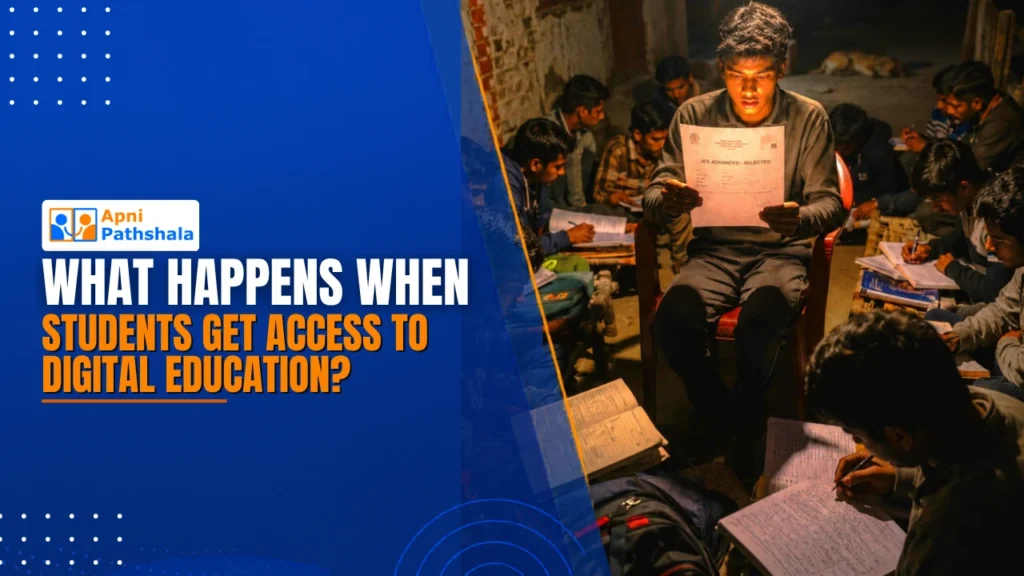
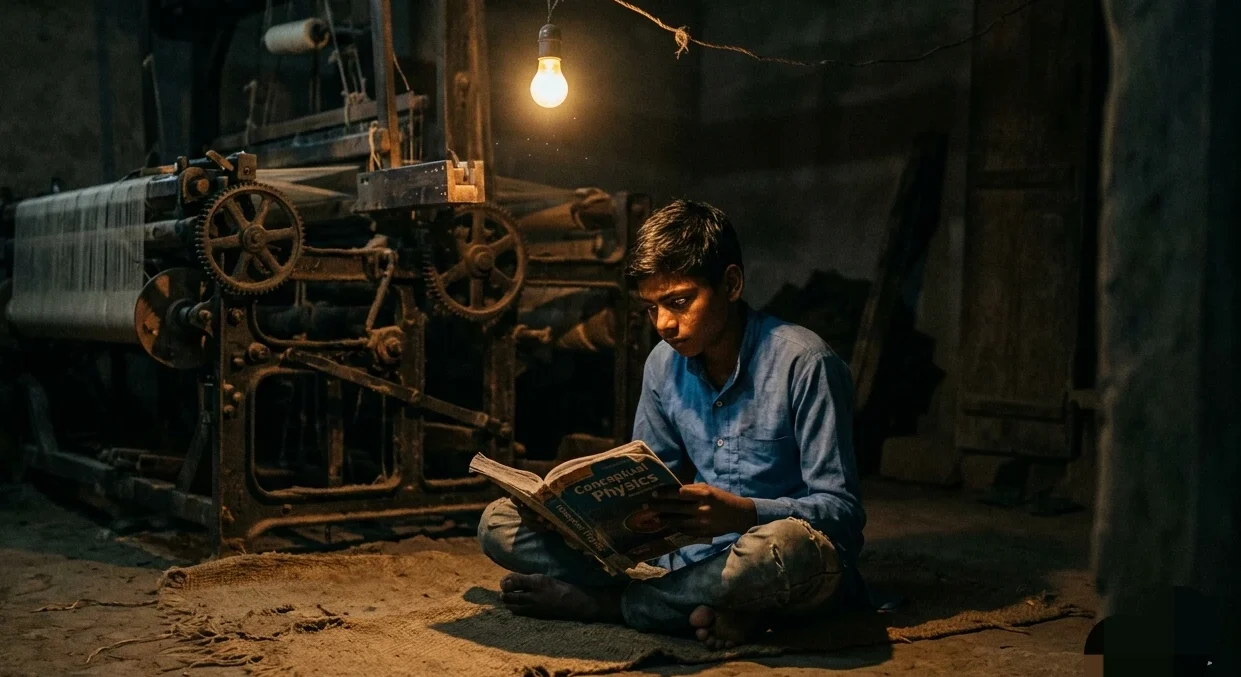
The power looms of Patwa Toli never stop. In this small weavers’ settlement in Gaya, Bihar, the mechanical clatter vibrates through the narrow lanes and thin brick walls day and night.
For students like Agastya Kumari and Om Kumar, finding a quiet place to read meant waiting until the rest of the village slept. Their reality is the reality of almost everyone in the neighborhood.
Families weave threads day in and day out just to keep the household running.
When you belong to a weaver community or a low-income family, the dream of clearing the IIT JEE Advanced, one of the toughest engineering exams in the world, feels almost impossible.
A ₹2 lakh fee for a famous coaching institute is not just out of reach…
It belongs to a different universe.
You don’t ask for what isn’t there. You use what you have.
And yet, this dusty neighborhood, often called India’s famous IIT village, Bihar, just produced another massive batch of successful IIT candidates.
They didn’t buy the Kota coaching alternative.
They beat the digital divide with grit, a fiercely protective community, and a quiet room at the end of the street.
Here is what their preparation actually looked like.
How Did Students From a Poor Weaver Village Start Cracking IIT JEE Every Year?
What Patwa Toli lacks in money, it makes up for in memory.
Years ago, a few local boys cracked the engineering exams, sparking a fire. They started an initiative called Vriksh Be The Change, creating a lifeline where older students return to mentor the younger ones.
The preparation here is raw.
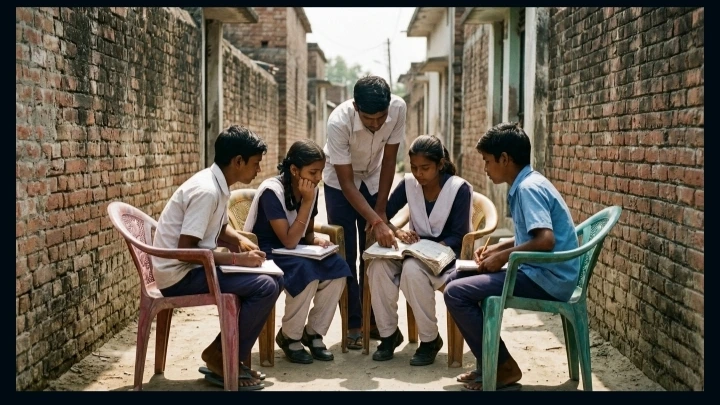
A group of seventy students formed a tight study circle. During the day, seniors would sit with them on plastic chairs in the alleyways, explaining complex chemical equations over the noise of the looms.
They shared worn-out reference books, passing heavy physics volumes from house to house.
But mentorship has limits.
Group discussions clear basic doubts, but cracking advanced calculus requires hundreds of hours of unbroken focus. Students tried studying on shared smartphones, squinting at PDF notes.
But the internet would drop.
Batteries would die.
How Many Hours a Day Do Students Study for IIT JEE Without Coaching?
If you want to understand IIT JEE preparation without coaching, you have to look at the clock.
There were no magic tricks.
The students of Patwa Toli maintained a grueling 10-to-12-hour daily split.
Mornings were for school and household chores. By 2:00 PM, they gathered in the lanes. For four hours, they relied heavily on peer-to-peer doubt solving.
- If Om couldn’t solve a trigonometry problem, Agastya would look at his notebook.
- If she couldn’t solve it, they would ask a senior.
They tore through years of past exam papers, sharing physical books because they didn’t have enough copies for everyone.
But the real work happened after the sun went down.
To clear this exam, reading theory is useless.
You have to solve unseen problems.
You have to condition your brain to panic, calm down, and figure it out.
For that, they needed a different kind of environment.
What Is the Best Study Environment for IIT JEE Self-Study?
After dinner, Om, Agastya, Abhishek, and their peers would gather their rough notebooks and walk down the street to a small room set up for the community.
It was an Apni Pathshala POD.
Inside these community-based learning centers, the heavy noise of the looms was finally muffled. There were rows of Apna PCs waiting for them.
For the first time, these students had physical keyboards, wide desktop screens, and a steady internet connection.
The room became their sanctuary. It stayed open late into the night.
Long after the village markets closed, the glow of the monitors illuminated students sitting quietly, solving problems side by side. There were no distractions. The computers were secured by Apni Prerna, a system that kept YouTube, social media, and gaming sites completely blocked.
True digital education success stories aren’t born from just handing a teenager a screen.
They happen when you give them a safe space to focus.
How Do You Prepare for IIT JEE When You Get Stuck Without a Teacher?
When you study without a tutor standing over your shoulder, getting stuck is the hardest part of the night.
At 1:00 AM, if a student couldn’t figure out a rotational mechanics problem, there was no teacher awake to ask. Instead of giving up, they leaned on digital self-study tools.
They opened Eklavya AI learning.
This is where the role of AI in education changes from a shortcut to a strict teacher. When a student submitted a wrong answer, Eklavya didn’t just hand them the correct steps to copy.
It paused.
Through adaptive learning, it offered a smaller, simpler question related to the exact same concept.
It forced them to look at their rough work and find their own mistake.
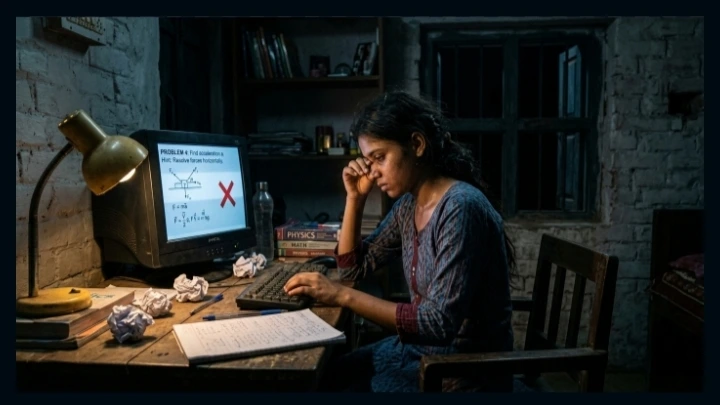
The frustration was often visible. A student would stare at a screen for twenty minutes, rubbing their eyes, surrounded by crumpled pages of calculations.
But they didn’t leave their chairs.
They learned to stay stuck.
They learned that the answer was hiding in their own effort, not in a teacher’s answer key.
Did students from Patwa Toli clear the IIT JEE Advanced? Here Are the Results
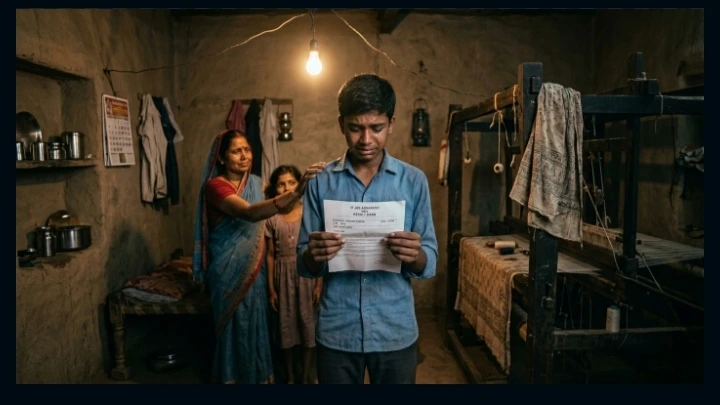
Months of this routine bled into the final exam.
Then came the day the results were announced. Then the sound of celebration suddenly drowned out the usual hum of the power looms.
- Abhishek Kumar checked his screen. He had secured a breathtaking AIR 1291 in the SC category.
- Agastya Kumari saw her result: AIR 6733 (OBC).
- Spandan Kumar pulled an AIR 6899 (OBC).
- Vidya Rani secured AIR 10517 (OBC).
- Om Kumar landed AIR 10668 (OBC), and Adija Kumari secured AIR 16151 in the General category.
The news spread rapidly from door to door.
Ten students from this POD group had cleared the IIT JEE Advanced
There were no giant billboards celebrating them. There were just proud parents, relieved mentors from Vriksh Be The Change, and a village that had once again proven its resilience.
Their success wasn’t a rejection of traditional coaching. It showed that when you give disciplined teenagers a supportive community and a quiet room with the right tools, they can succeed in any system.
They just needed the space to figure it out.
(Visit apnipathshala.org to learn how to open a POD and build a quiet, dedicated learning space for the students in your community.)
If you want to know why spoon-feeding answers destroys a student’s confidence in the exam hall, read our breakdown here: What Most After-School Learning Programs Fail to Teach Children.
Frequently Asked Questions
1: Which village is known as the IIT village of India?
Ans: Patwa Toli, located in Gaya, Bihar, is widely known as the “Village of IITians.” Despite being a community of weavers facing severe financial hardships, the village produces dozens of successful engineering candidates every year through community support and digital learning.
2: Can I clear IIT JEE without coaching?
Ans: Yes. Thousands of students clear the exam using self-study. The key is replacing the traditional coaching center with strict discipline, peer mentorship (like Vriksh Be The Change), and adaptive AI tools that explain concepts deeply rather than just providing direct answers.
3: What is an Apni Pathshala POD?
Ans: A POD (Point of Digital Learning) is a safe, community-run room equipped with computers and high-speed internet. Students use tools like Eklavya AI for independent learning, while the environment remains entirely distraction-free.
4: Why do students still struggle after tuition?
Ans: Because many tuition classes focus on marks and homework, not real understanding. Students need problem-solving skills, confidence, and self-learning habits to grow.




6 Responses
amazing journey and amazing learning ,
Thank you for your kind words. We’re glad this journey and learning experience could connect with you. Your support motivates us to keep sharing more such student stories.
Its great to be connected with Apni Pathshala, where I can grow not just academically but also intellectually.
Thank you so much. We’re happy to have you connected with Apni Pathshala. Keep learning, growing, and exploring new opportunities with us.
Thank you . Very good article
Thank you so much for your kind words. We’re glad you found the article valuable.