

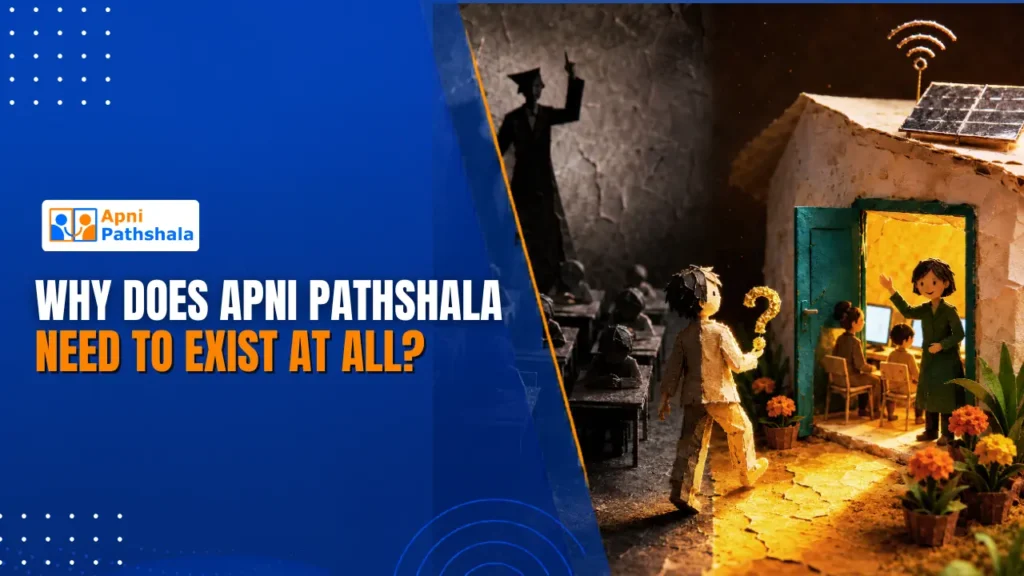
Two weeks before my physics exam, our teacher was replaced. The new teacher walked into class, told us she would send notes, and asked us to learn them for the exam.
I raised my hand.
“Ma’am, you have not taught us the topic. How are we supposed to learn notes about something we do not understand?”
There were around eighty students in the room. Nobody supported me.
The teacher yelled. The class stayed quiet. Somehow I became the problem, while memorising an untaught subject remained completely normal.
Why can someone spend fifteen years in education and still feel afraid to ask one obvious question? Why does “What job will I get?” feel normal, while “What can I build?” sounds reckless?
This is why Apni Pathshala needs to exist.
We Are Being Trained to Wait
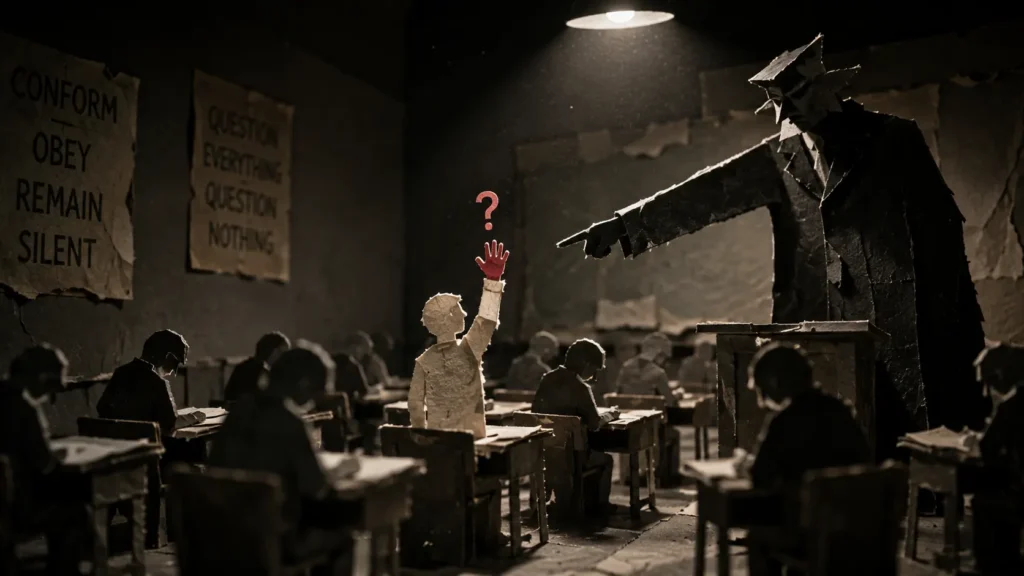
Study this chapter. Give this exam. Get this degree. Apply for this job and then wait for the result.
Every step has an authority. Every year ends with somebody else deciding whether you are good enough to move forward.
Then education ends. But as David Goggins said, “Life is the only test where you can’t teach”
No syllabus explains which problem is worth solving, how to test an idea, build an app, create a website, or turn a skill into useful work.
So we search for another authority. Which course should I take? Which job is safe?
We call it career confusion. Sometimes it is the shock of directing a life after years of being rewarded for following directions.
Osho put the problem harshly:
“Education is a program to give you ambition by punishment and reward, to drive you in a certain direction.”
Ambition can be useful. The disturbing part is reaching the finish line and realising you never chose the race.
Education Was Meant to Reveal a Person
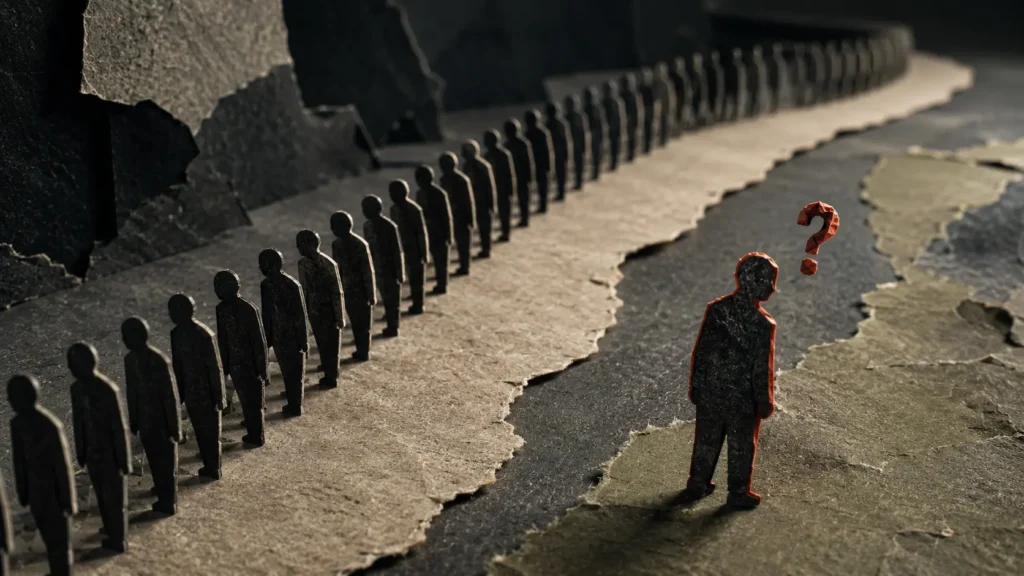
“Education is the manifestation of the perfection already in man.” – Swami Vivekananda
That feels almost opposite to modern education.
We treat the learner like an empty balloon. Put facts in. Test them. Forget them after the exam.
But “manifestation” means something already exists. Curiosity. Intelligence. Courage. Imagination. The ability to question, build, fail, and begin again.
Education should help those powers become visible. You do not discover them by memorising definitions of creativity. You can only discover them while trying to make something.
- Build a website, and you discover whether you can teach yourself.
- Write an article, and you discover where your thinking becomes foggy.
- Create an app, and you discover that the first idea was bad, the second broke, and the third became useful!
The Missing Subjects Are Concentration and Detachment
Vivekananda also said:
“To me the very essence of education is concentration of mind, not the collecting of facts.”
He argued that concentration and detachment should be developed together.
Concentration means keeping your mind on one difficult problem long enough to understand it. Detachment means pulling your mind away from distraction, comparison, fear, or an old goal that no longer makes sense.
Our attention is dragged by notifications. Our choices are dragged by status. Our careers are dragged by whatever everyone else is preparing for.
Then we blame ourselves for lacking discipline.
A young person needs something worth concentrating on. A question. A project. A problem inside their community. Something they genuinely want to make real.
What Would a New Culture of Learning Look Like?
A new culture cannot be built by adding one subject called “critical thinking” and asking everyone to memorise its definition.
It needs a different environment.
- One where asking “why?” does not make you the difficult student.
- Where learning can begin with an interest, not only a chapter.
- Where learners create websites, apps, businesses, stories, research, and solutions.
- Where AI, mentors, peers, and courses provide support without taking over the process.
- Where failure becomes information.
And where education asks more than, “What marks did you get?”
- What can you do now?
- What did you create?
- What will you try next?
How Apni Pathshala Is Trying to Build That Culture
The larger attempt is to return learning to communities and return agency to learners.
Apni Pathshala supports locally led PODs with technology, practical learning tools, mentorship, operational guidance, and paths toward local autonomy. Learners explore, ask questions, build real-world skills, and follow flexible learning paths with support from local leaders and technology. (Apni Pathshala)
But total control creates dependence and total freedom can leave a beginner lost..
A learner needs a perfect blend.
The local mentor knows the community. The wider system supports the mentor. Technology expands what is possible. The learner gradually becomes capable of continuing independently.
How Do We Know Whether This Education Is Working?
Apni Pathshala should not be judged solely by the number of computers installed, accounts created, or courses completed.
The test is the person leaving the POD.
Can they ask a better question? Can they build a simple website or project? Can they explain what they made?
That result is harder to photograph, but it matters most.
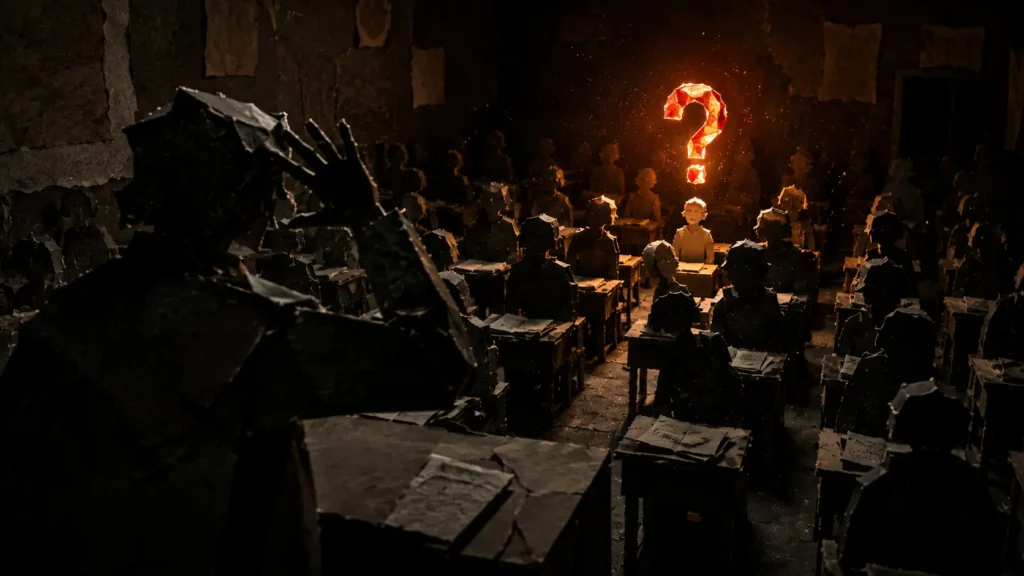
In my physics class, eighty students were given notes and told to learn. Only one question disturbed the arrangement:
How can we learn what nobody has helped us understand?
A new culture of learning begins when that question is welcomed. It grows when learners are trusted to explore, given tools to build, and supported without being controlled.
India does not need another system that produces silent rooms full of people waiting for rules. It needs communities where people learn how to choose, concentrate, question, create, and begin.
That is why Apni Pathshala needs to exist.
Continue Reading
A new culture of learning must eventually change what young people can actually do.
Read 7 Digital Skills Every Teenager Should Learn Before College to explore the practical abilities students can develop by researching, creating, solving problems, and building real projects.
Frequently Asked Questions
1. Why does India need a new culture of learning?
Ans. A new learning culture should develop concentration, curiosity, critical thinking, creativity, and the confidence to act without waiting for every step to be assigned.
2. How is Apni Pathshala different from traditional education?
Ans. Apni Pathshala supports locally led learning spaces where learners can explore their interests, build practical skills, work on projects, and receive guidance from mentors, peers, technology, and AI tools. The aim is to help learners gradually become more independent.
3. Does Apni Pathshala aim to replace schools and teachers?
Ans. No. Apni Pathshala adds a flexible, community-based layer of learning. Schools and teachers remain important, while PODs can give learners more room to experiment, create projects, ask questions, and develop abilities that fixed classrooms may not always have time to support.
4. Who can start or support an Apni Pathshala POD?
Ans. Educators, NGOs, trusts, colleges, community organisations, and local leaders can apply to start a POD. People can also support the movement by offering space, devices, funding, mentorship, technical knowledge, or community connections.


4 Responses
good writing
Thank you, glad you liked it.
Thought-provoking article! Apni Pathshala isn’t just about education, it’s about giving every child an equal opportunity to learn, explore, and build a better future
Thank you so much for your kind words. Truly, Apni Pathshala is built on this belief that every child deserves the right opportunity to learn and grow.