Teacher Training Program (TTP)
Learning From Real POD Experience
Apni Pathshala PODs across India support each other by sharing real, experience-driven solutions through the Teacher Training Program.

Why This Program Is Needed ?
Many PODs face day-to-day challenges such as:

Every POD Faces Daily Challenges
Managing students, discipline, and learning gaps is a daily reality for most PODs. These challenges directly impact student outcomes if not addressed early.

Parent & Community Engagement Is Difficult
Explaining learning value, handling admissions, and building parent trust is not easy. Yet some PODs have already figured out what works in their local context.

Uneven Exposure to Advanced Skills
Some PODs are confident teaching AI and advanced digital skills, while others want to start but don’t know how. This gap slows collective progress.

Operational Stress Slows POD Growth
Running a POD involves teaching, management, counselling, and administration. Without support, POD Leaders often feel stretched and isolated.

Practical Solutions Already Exist
Many PODs have solved these exact problems through experience. The issue is not lack of solutions, but lack of structured sharing.

Student management Peer Learning Builds Strong Communities
PODs learn best from other PODs who understand the same realities. Peer-to-peer learning builds trust, confidence, and collaboration.
At the same time, some PODs handle these areas very well. Apni Pathshala believes that community learning works best when peers help peers.
Why This Program Is Needed ?
Many PODs face day-to-day challenges such as:

Sustaining POD

Special Learning Needs

Curriculum Challenges

Student Management
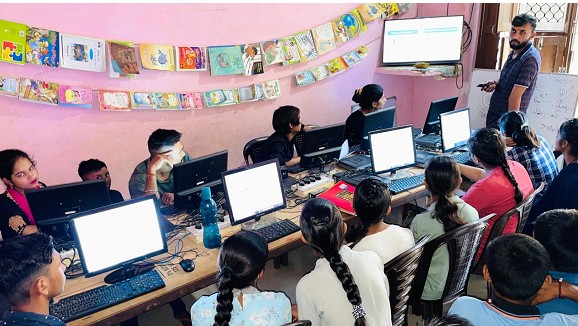
Counsuling Students

Teaching AI
At the same time, some PODs handle these areas very well. Apni Pathshala believes that community learning works best when peers help peers.
Every POD Has Its Own Strength (USP)
Teachers Share Experiences
Simple & Practical Learning
POD Learning From PODs
Every POD Has Its own Strenghts(USP)
Each POD does something better than others student management, AI teaching, parent engagement, or community outreach.
Another POD Needs That Strength
The challenges faced by one POD are often already solved by another POD somewhere in the network.
Real Experience Creates Real Learning
When POD Leaders share what actually works on the ground, learning becomes practical, relatable, and immediately useful.
What PODs Will Share
Selected PODs will create simple guidance videos on topics they are good at, such as:
How to create a better AI curriculum ?
How to manage nursery students ?
How to improve student discipline and attendance ?
How to reach the community and increase admissions ?
How to explain learning value to parents ?
How to support children with disabilities ?

How to create a better AI curriculum ?
Focus on Utility: Skip the coding theory and focus on “Prompt Engineering” for real-life tasks like writing emails or generating images for school projects.
Project-Based Learning: Have students build a “mini-solution,” such as an AI-generated study plan, to show immediate value to both the student and their parents.
How to manage nursery students ?
The 15-Minute Rule: Switch activities every 15 minutes between digital play and physical movement to manage their short attention spans.
Routine-Driven Discipline: Use a visual “Daily Map” so kids know exactly when it’s time for “AI Play” versus “Story Time,” which reduces anxiety and tantrums.


How to improve student discipline and attendance ?
Peer Accountability: Assign “POD Captains” responsible for checking in on their friends when they miss a class, fostering a sense of community.
Gamified Rewards: Use a simple points system where attendance and good behavior earn “Digital Badges” or extra time on popular AI tools.
How to reach the community and increase admissions ?
Live Demos: Instead of flyers, hold a “Saturday Showcase” where local parents watch their children use AI to solve a problem in real-time.
The WhatsApp Effect: Share 30-second video clips of students achieving a specific milestone; this social proof is more effective than any advertisement.


How to explain learning value to parents ?
Bridge the Gap: Explain AI not as “tech,” but as a “future-ready skill” that will help their child get better jobs or run a business more efficiently.
Tangible Results: Show parents a physical or digital product the child created, rather than just a certificate.
How to support children with disabilities?
Assistive Shortcuts: Teach the use of voice-to-text for students with writing difficulties or screen readers for those with visual impairments.
Inclusive Pairing: Partner them with a high-performing “Buddy Student” to ensure they are never left behind during group activities.
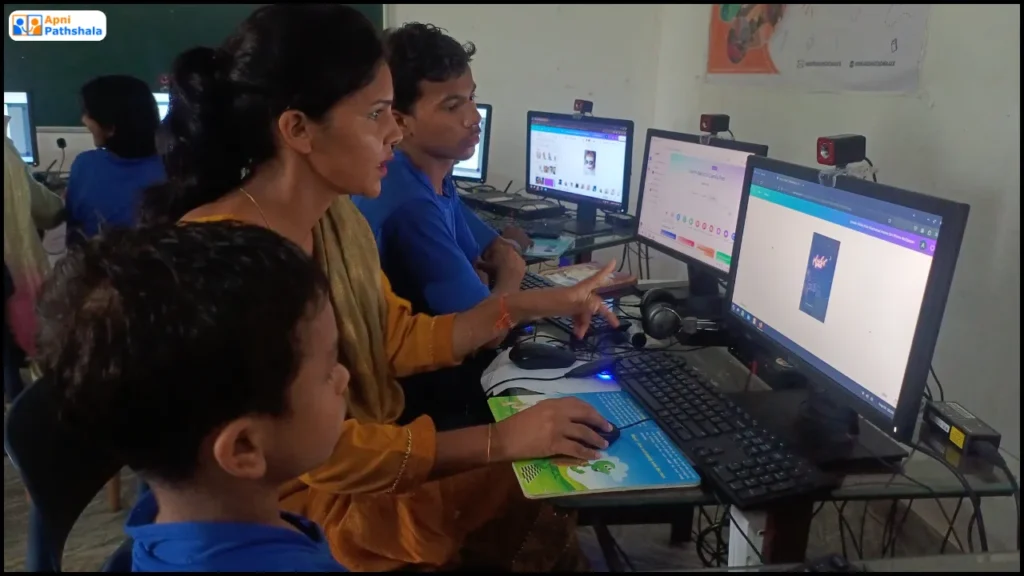
Step-by -Step Procedure
Publish Learning Content
Create Guidance Videos
Identify Strong PODs
Identify Strong PODs
Connect the PODs Together
Guide PODs Facing The Issue
Identify Common POD Challenges
Identify Strong PODs
Create Guidance Videos
Publish Learning Content
Guide PODs Facing The Issue
Connect the PODs Together
Step-by-Step Procedure
Apni Pathshala identifies recurring POD challenges through reports, feedback, and regular communication with PODs.
PODs that consistently perform well in specific areas and are willing to share their experience are identified.
Selected POD Leaders or teachers record short, experience-based videos explaining how they handle the challenge in practice.
The content is published on the already built courses page of the Apni Pathshala website and organised topic-wise.
Role Of Apni Pathshala
Identifying Needs
Coordinating training
Publishing Resources
Connecting Leaders
Join The TTP & Grow Together
Solve Problem Faster
Boost Student Success
Build a Stronger Network
Continious Teacher Growth
Stronger PODs. Stronger Community.
The Helping Hand Program helps PODs solve problems faster, reduces isolation, and builds confidence. When PODs support each other, growth becomes collective and every student benefits.